Do You Need a Permit for a Mobile Billboard Truck?
Whether you need a permit for a mobile billboard truck really depends on the specific city you’re planning to advertise in. The rules can be surprisingly different from one place to another, much more so than most people realize. In some cities, you might be able to drive an LED truck around the main tourist areas all day and night with no special paperwork at all. But in other cities, that same truck might be completely banned from public streets. Before you commit to a campaign, it’s important to understand how things actually work in the major markets, like Miami, Los Angeles, Las Vegas, and New York City.
Why Mobile Billboard Regulations Vary by City?
Just a quick note: these regulations can change, and how strictly they’re enforced can vary. A good mobile billboard company will take care of all the compliance details for you. That’s a big part of what you’re paying them for.
Mobile Billboard Rules in Miami
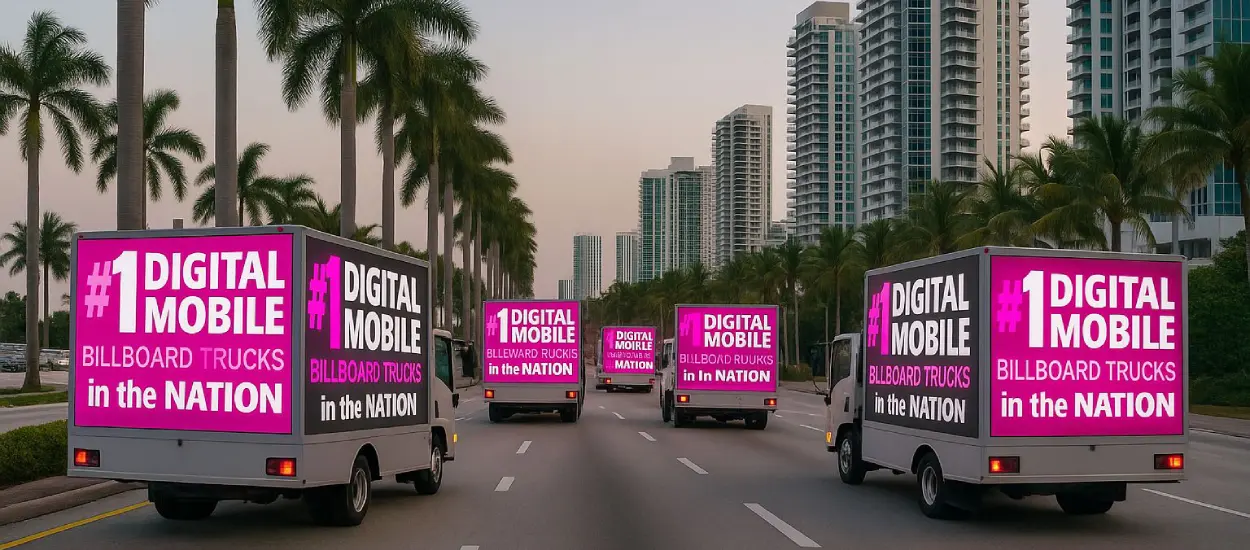
In Miami, advertising with mobile billboards is generally pretty straightforward, especially on the mainland. Areas like Downtown, Brickell, Wynwood, Little Havana, and the Design District allow these trucks to operate on public roads just like any other commercial vehicle, without needing a special advertising permit. This is why you often see them around Bayfront Park during major events like Ultra Music Festival or stuck in traffic on Brickell Avenue during rush hour. You may also be interested in truck billboard advertising in Florida, Texas, California.
Mobile Billboard Restrictions in Miami Beach
However, Miami Beach has its own set of rules, and they are much stricter. The City of Miami Beach has a specific ordinance regarding signs, and they’ve historically been very tough on mobile advertising, particularly along Ocean Drive and Collins Avenue, especially during peak tourist season or big events like Art Basel. If you want to run a campaign in Miami Beach, you need to plan your routes carefully to stick to the approved streets. Experienced operators know which roads are okay and which ones will likely result in a ticket. The key takeaway is that you can definitely reach people in South Beach, but the route has to be planned with the local regulations in mind, not just driven wherever. You may also be interested in truck billboard advertising in Florida, Texas, California.
Mobile Billboard Laws in Los Angeles and Las Vegas
Los Angeles and Las Vegas offer a stark contrast when it comes to mobile billboard rules. Los Angeles decided to crack down on mobile billboards over ten years ago. After receiving many complaints about advertising trailers being parked on streets for extended periods, especially in areas like Venice and West LA, the city passed a law in 2011 to strictly limit parked mobile billboards. California state law also specifically allows cities to ban them altogether. What has survived in LA is the moving billboard format. A driven LED truck on a route like Sunset Boulevard or Wilshire is legally different from a trailer that’s just parked and chained to a pole. That’s why professional operators in Los Angeles focus on continuous routes and never leave their trucks parked with the ads displayed.
Las Vegas, on the other hand, is pretty much the opposite and could be considered the capital of mobile billboards in the United States. Courts have previously rejected attempts to ban them, and now LED trucks are a common sight on the Las Vegas Strip. They often drive in loops from Mandalay Bay, past the Bellagio fountains, all the way up to the STRAT, and also circulate downtown around the Fremont Street Experience. During major events like CES or big fight weekends at Allegiant Stadium, you’ll see dozens of these trucks running along the Strip at the same time. If you’re looking for a place with the least amount of hassle to try out mobile advertising, Las Vegas is probably your best bet in the country.

Can You Use Mobile Billboards in New York City?
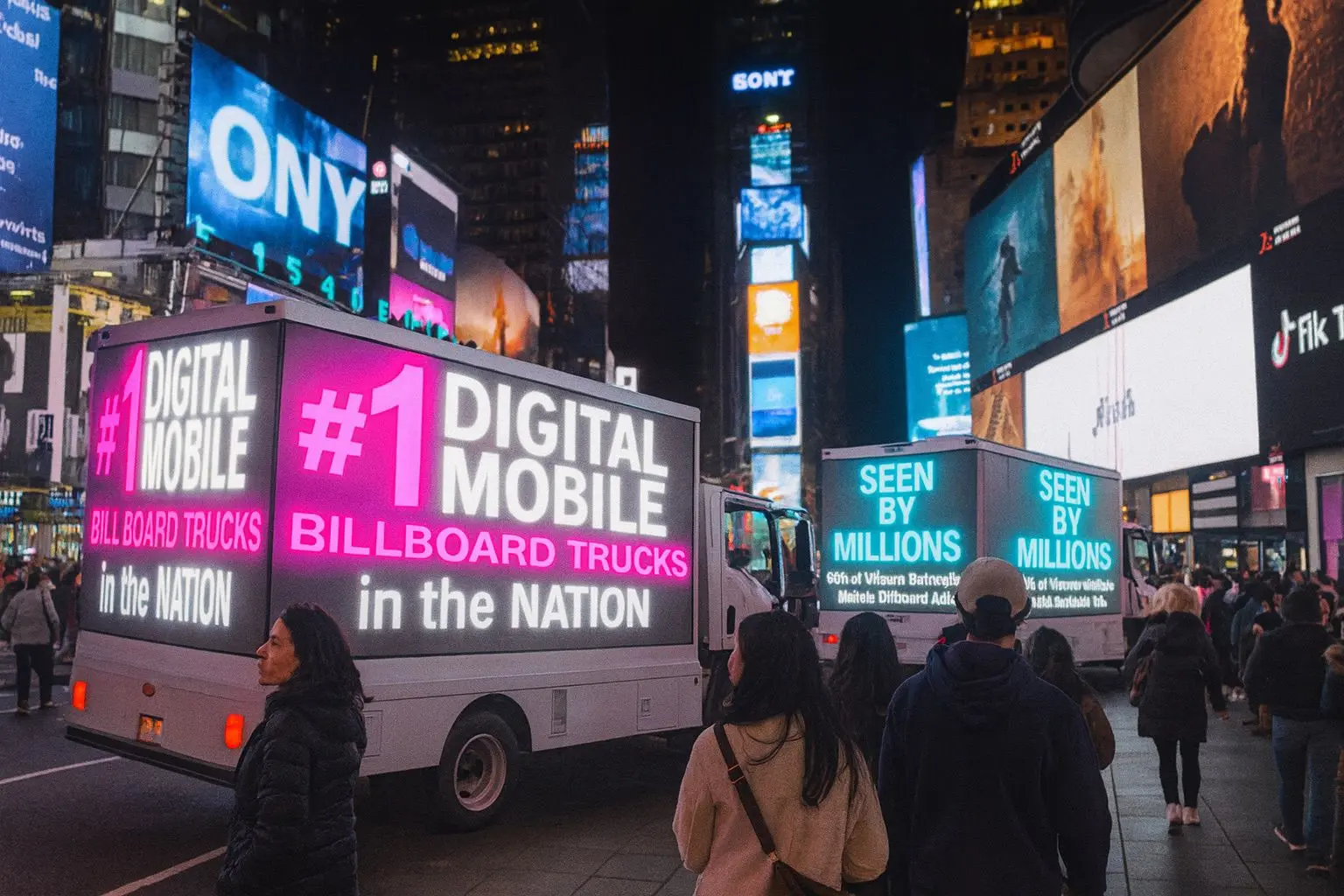
New York City is the one place where the answer to whether you need a permit is basically no, because it’s generally not allowed. This is where many advertisers from outside the city make a mistake. New York City traffic regulations prohibit operating a vehicle on city streets if its sole purpose is commercial advertising. This means that a traditional billboard truck, one that’s designed only to carry an advertisement, is illegal to operate within the five boroughs. The city does issue tickets for this, and you’ll see enforcement most visibly around Times Square.
Legal Alternatives for Outdoor Advertising in New York
Instead of those dedicated billboard trucks, what does work in New York are advertising wraps on vehicles that have a real functional purpose, like delivery trucks. Digital billboards placed on private property where they are legally parked are also an option. Another common strategy is to simply shift your advertising campaign across the river to New Jersey. Routes along the Hudson waterfront in Hoboken and Jersey City can put your message in front of commuters heading into Manhattan without running into New York City’s specific restrictions.
Key Takeaways for Planning a Mobile Billboard Campaign
The main lesson from looking at all four of these major cities is the same: mobile billboard advertising is legal and can be very effective in most places, but you absolutely need a strategy for how and where you’ll drive or park the vehicle, and that plan has to be tailored to each specific city’s rules. This isn’t something you can figure out on your own without expert help.
Partner with us to drive your brand forward with mobile billboard advertising on trucks. Contact us today to learn more about our services and how we can help elevate your advertising campaign.
Engage a wide audience instantly with captivating ads by leveraging the power of targeted location, the brightest screens on the market with video or static ads, even 3D immersive animation and sound.
We value your inbox as much as you do, so rest assured that we won't clutter it with unnecessary spam. You’ll only hear from us when we have relevant, valuable offers that we think you'll love.
(We do not share your data with anybody, and only use it for its intended purpose)